Desi Ghee vs Banaspati Ghee - Which One Is Better?

The Great Cooking Fat Debate in Pakistani Kitchens
For decades, commercial advertising popularized Banaspati Ghee as a budget-friendly alternative to traditional Desi Ghee. However, modern medical research highlights serious health concerns associated with hydrogenated vegetable fats.
1. Method of Production
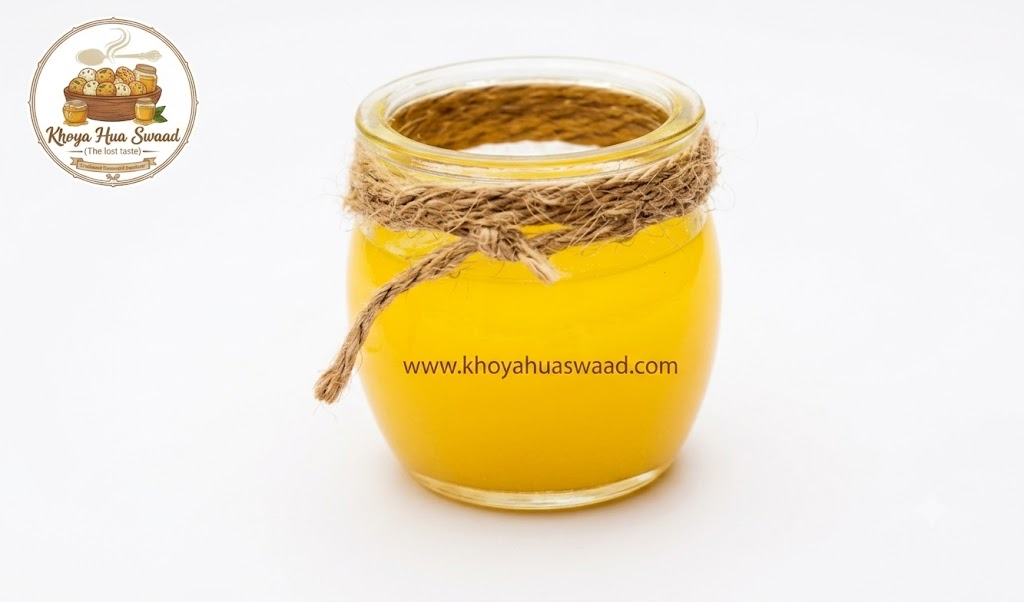
Desi Ghee: 100% natural. Prepared by simmering churned butter from whole milk until water evaporates and milk solids caramelize.
Banaspati Ghee: Industrial product. Liquid vegetable oils undergo chemical hydrogenation with nickel and aluminum catalysts to force solidification at room temperature.
2. Trans Fat Content
Banaspati Ghee often contains up to 15–25% artificial trans fatty acids, known to elevate LDL (bad) cholesterol and increase risks of heart disease, hypertension, and diabetes.
Pure Desi Ghee has 0% artificial trans fats and contains beneficial Conjugated Linoleic Acid (CLA) which aids fat loss and reduces arterial inflammation.
3. Taste & Aroma in Traditional Dishes
No artificial fragrance can replicate the deep, rich, authentic aroma of pure homemade Desi Ghee in Biryani, Nihari, Halwa, or Parathas.
Switch your kitchen to 100% natural Khoya Hua Swaad Pure Desi Ghee for a healthier, tastier lifestyle.
Frequently Asked Questions
Q: What is Banaspati Ghee made of?
A: Banaspati Ghee is made by chemically hydrogenating liquid vegetable oils (like palm oil or soybean oil) using nickel catalysts under high pressure.
Q: Why is pure Desi Ghee healthier for cooking?
A: Pure Desi Ghee contains zero artificial trans fats, is rich in natural fat-soluble vitamins, and remains stable at high temperatures without producing free radicals.